Launch offer — valid today only

Nursing Pharmacology, Finally in Order: for Your Exam, Your Placement or Your Return to the Ward Each Drug Class on One Drawn Page, Always in the Same 5 Steps

Beta-blockers, ACE inhibitors, diuretics, anticoagulants, inhalers, opioids, antibiotics and insulin: in your notes it's a wall of text. Here every topic fits on one page, with the drawing and what you need to remember. 65 illustrated pages.

I WANT THE ILLUSTRATED GUIDE

🔒 Secure checkout · PDF by email · 30-day guarantee

One topic per pageOne drug class per page, always in the same 5 steps
65 illustrated pages7 parts, from the 5-step method to the most common mix-ups
Up-to-date sourcesBNF, NICE guidance and MHRA Drug Safety Update

This Is What the Pages You Will Study Look Like

One topic per page, the drawing that shows you how it works and the boxes with what you need to know:

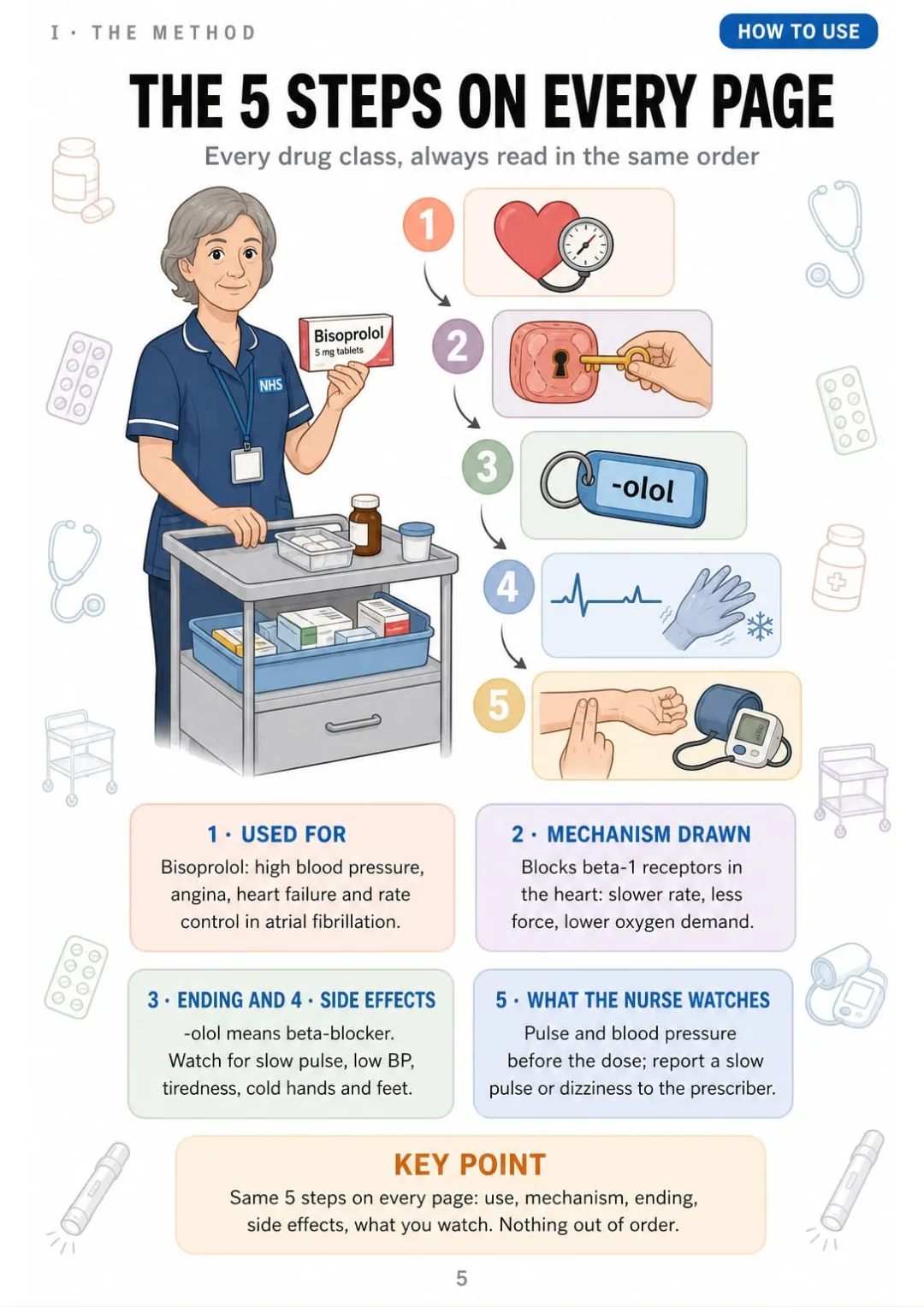
Bisoprolol worked through in 5 steps: use, mechanism, -olol, side effects, pulse and BP.
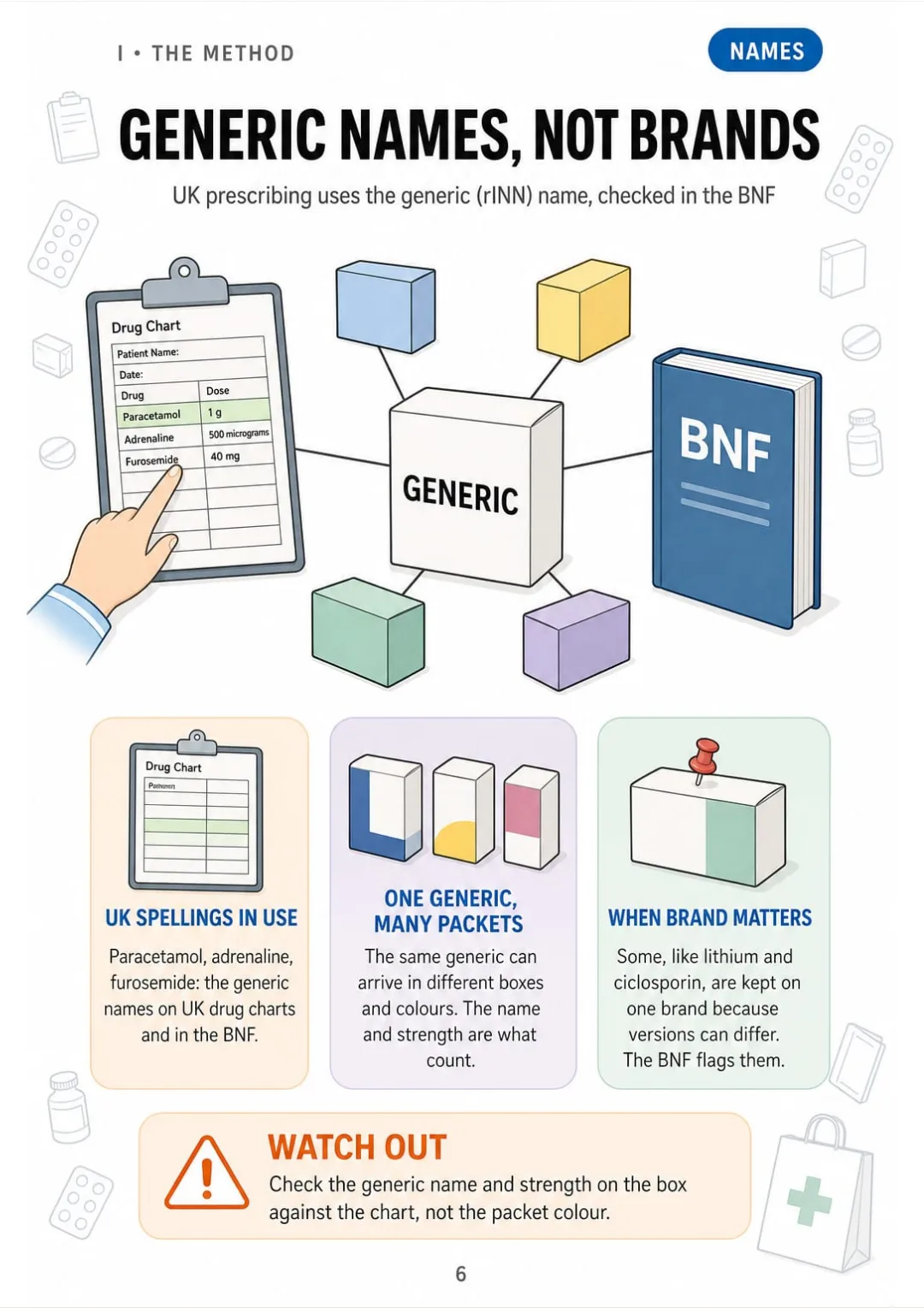
Generic names only, as in UK practice and the BNF: one name, many packets.
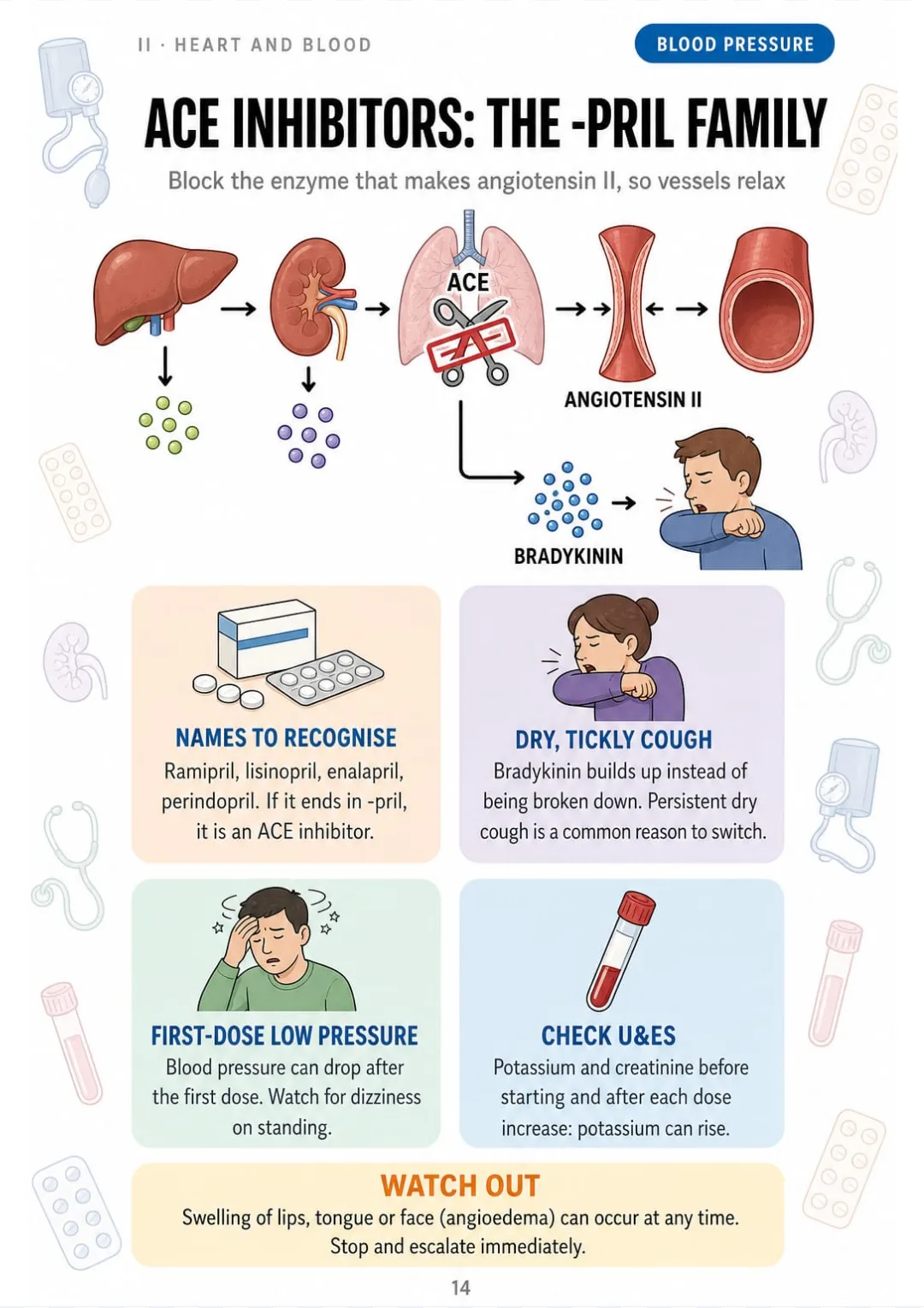
ACE inhibitors: ramipril blocks angiotensin II, so watch cough, potassium and first-dose hypotension.
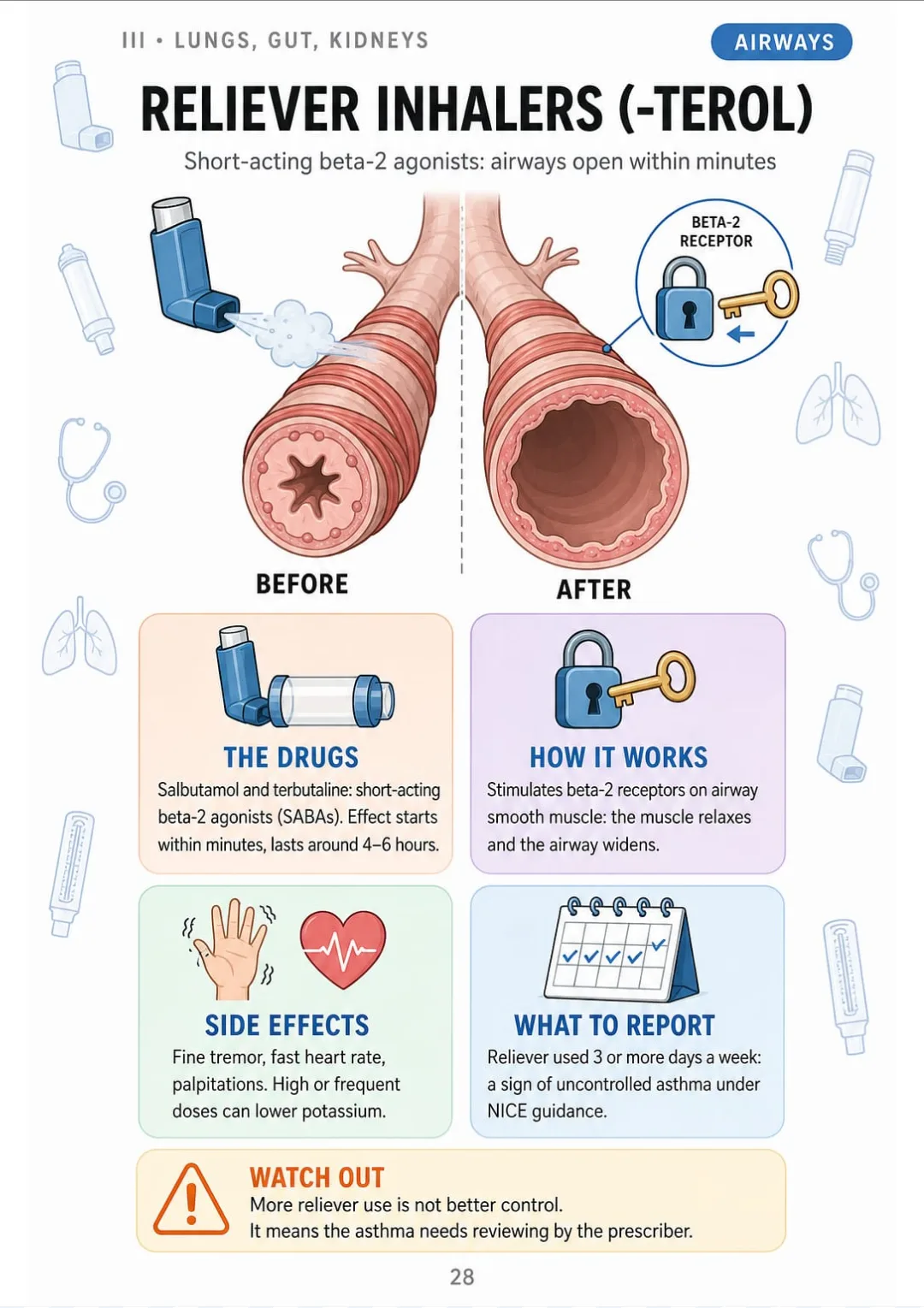
Salbutamol relaxes airway muscle in minutes; use 3+ days a week flags uncontrolled asthma.
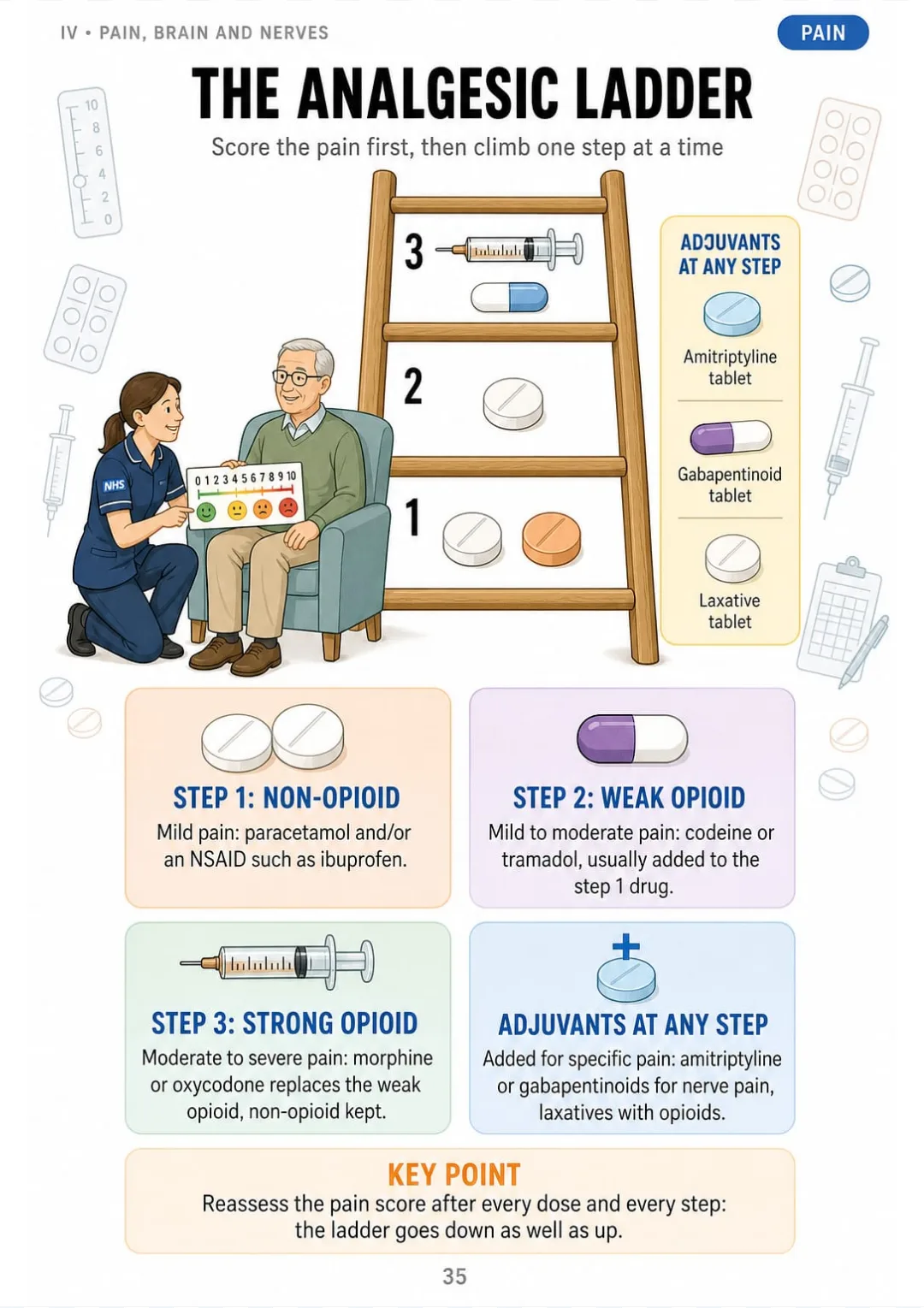
Step 1 paracetamol/NSAID · Step 2 codeine · Step 3 morphine, oxycodone · adjuvants at every step
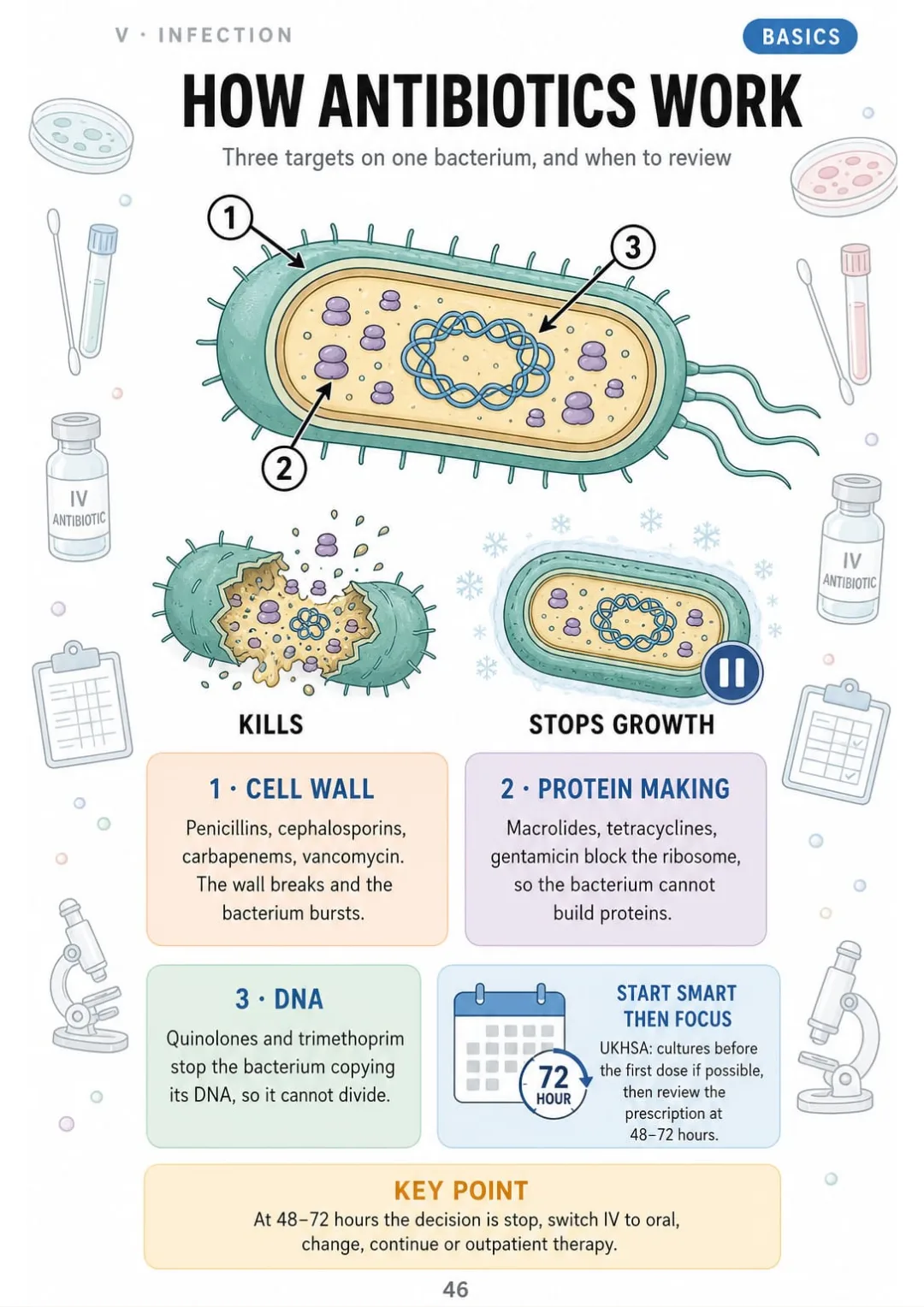
Cell wall, protein, DNA: the three targets and the 48–72 hour review.
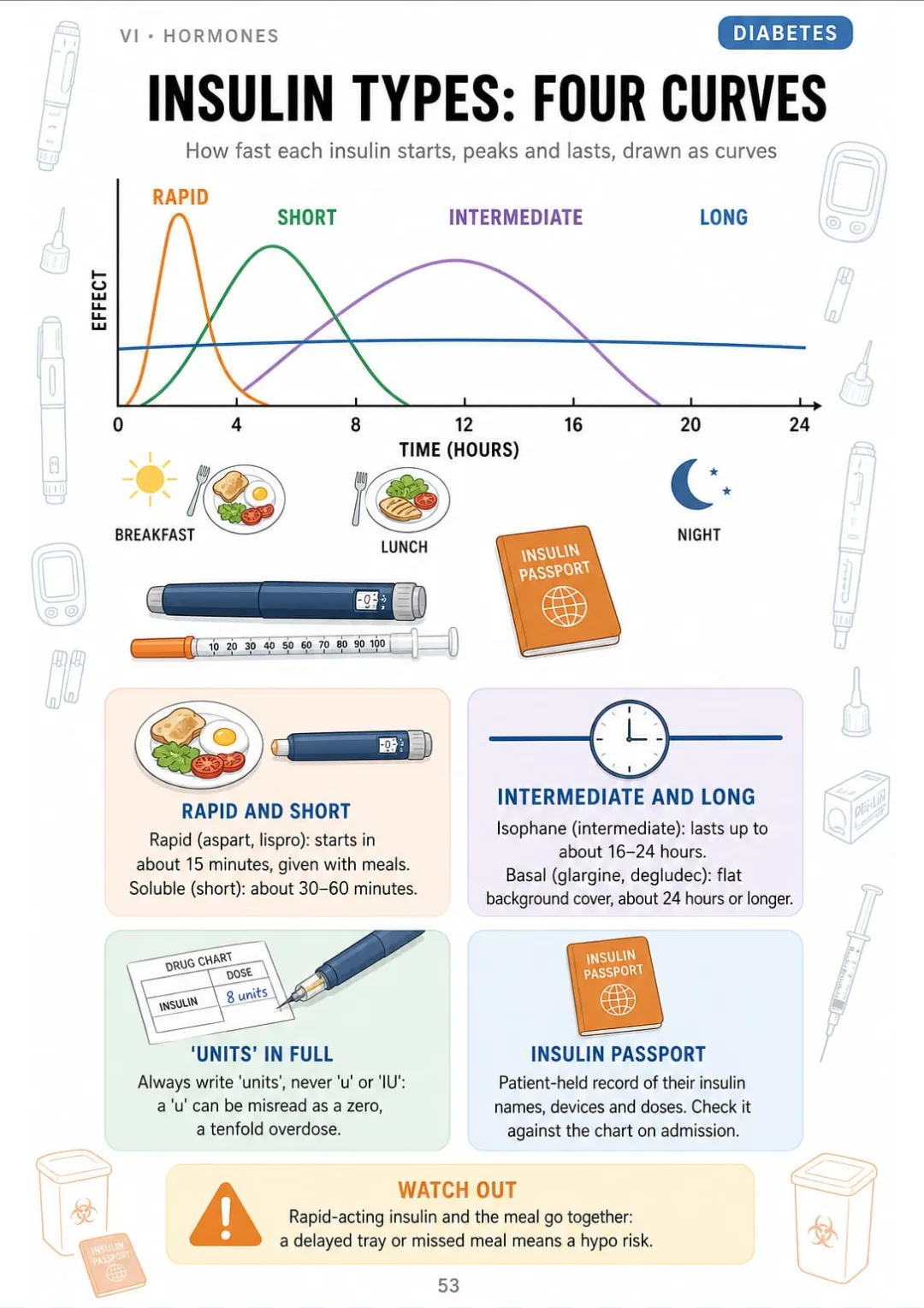
Rapid, short, intermediate and long-acting insulin drawn as four onset curves, plus why 'units' is always written in full.
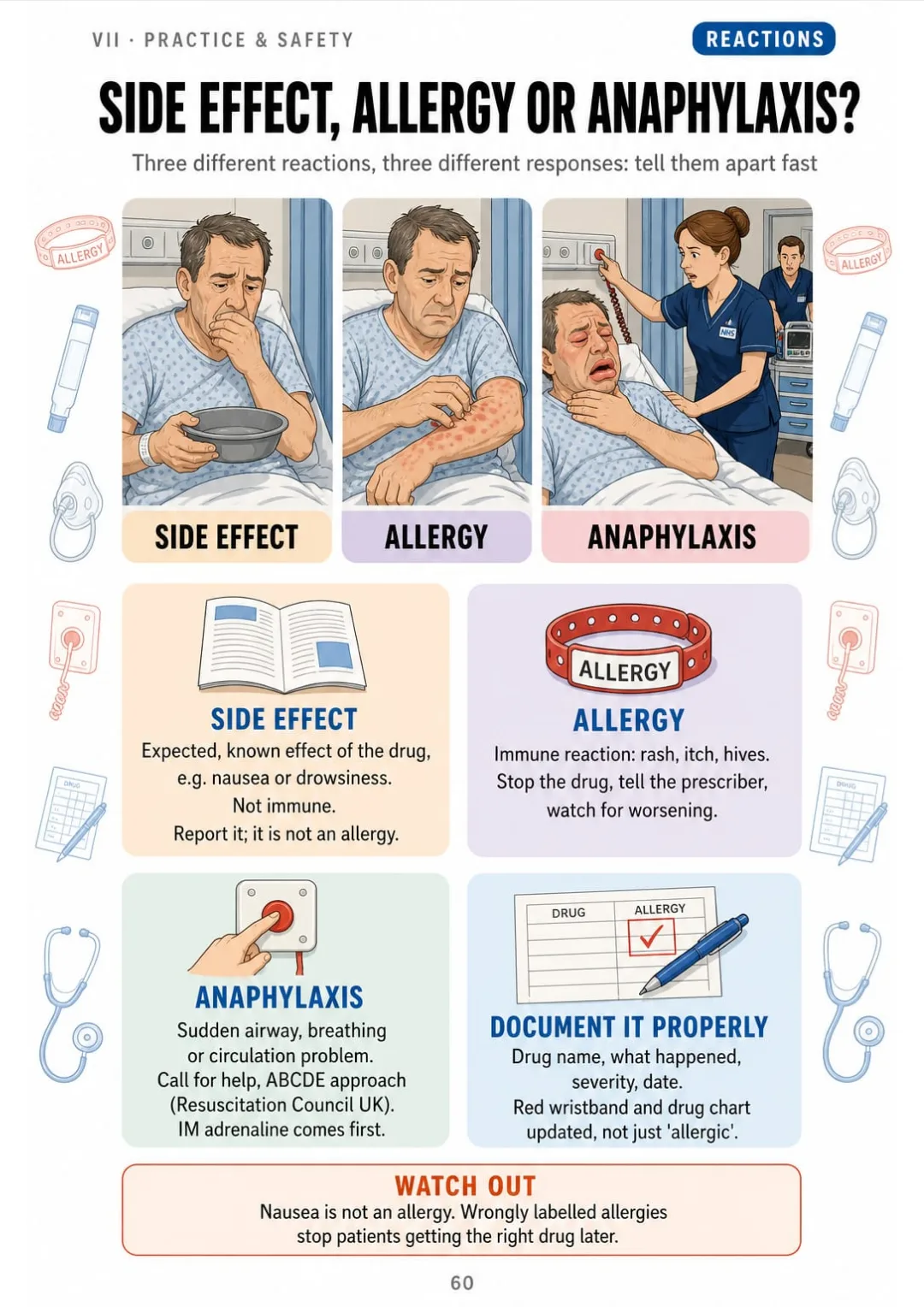
Side effect, allergy, anaphylaxis: what you see in each and what you do first.

Swipe to see more →

These are real pages from the book. The table of contents is the full one: 7 parts and 61 topics.

It's Not That You Have a Bad Memory. It's That Nobody Put It in Order.

You've read the page on ACE inhibitors three times. You close your notes...

...and you can't remember why ramipril causes a cough or what happens to potassium. It was just lines of text, one after another.

ACE inhibitors: ramipril blocks angiotensin II, so watch cough, potassium and first-dose hypotension.

Here ACE inhibitors are one drawn page: the enzyme ramipril blocks, the -pril ending that gives the family away, and what to watch: cough, potassium and blood pressure after the first dose.

And on the pages next to it, every drug class has its own: beta-blockers, statins, anticoagulants, inhalers and insulin.

First you understand why it works that way. Then the 5 steps stick on their own.

SEE THE DIFFERENCE

Stop memorising drug names you can't picture:

THIS
  • Pages and pages of dense text
  • Drug classes without a single drawing
  • In the exam, you don't know where to start
In accordance with the principles of rational prescribing, medicinal products should be prescribed by their approved non-proprietary name as listed in the British National Formulary, except where clinically significant differences in bioavailability between formulations necessitate brand-specific prescribing, as with certain modified-release preparations, lithium, ciclosporin and some antiepileptic agents. A single active substance may be marketed under multiple proprietary names, packaging designs and presentations by different manufacturers, which constitutes a recognised source of duplication error during medicines reconciliation and administration where the practitioner fails to identify the common generic entity.
FOR THIS
  • Every drug class drawn
  • One topic per page, with the key points in boxes
  • You remember it because you've seen it
Generic names only, as in UK practice and the BNF: one name, many packets.
CONTENTS

Take a Look at the 7 Parts and 61 Topics

I. The method and the basics · II. Heart, circulation and blood · III. Lungs, gut and kidneys · IV. Pain, brain and nerves · V. Infection · VI. Hormones and metabolism · VII. Safety and revision: 65 illustrated pages

IThe Method and the Basics · pp. 5-13
  1. The 5 Steps on Every Page
  2. Generic Names, Not Brands
  3. Name Endings: The Key to 400 Names
  4. Receptors: Agonists and Antagonists
  5. The Journey of a Drug: ADME
  6. Half-Life and Steady State
  7. Narrow Therapeutic Index
  8. Routes and Speed of Onset
  9. Drug Calculations: One Formula
IIHeart, Circulation and Blood · pp. 14-27
  1. ACE Inhibitors (-pril)
  2. ARBs (-sartan)
  3. Beta-Blockers (-olol)
  4. Calcium Channel Blockers (-dipine)
  5. Loop Diuretics
  6. Thiazide and Thiazide-Like Diuretics
  7. Potassium-Sparing Diuretics
  8. Nitrates
  9. Digoxin
  10. Statins (-statin)
  11. Antiplatelets
  12. Warfarin
  13. DOACs (-xaban, -gatran)
  14. Heparins (-parin)
IIILungs, Gut and Kidneys · pp. 28-34
  1. Reliever Inhalers (-terol)
  2. Preventers: Inhaled Steroids and LABAs
  3. Antimuscarinic Inhalers (-tropium)
  4. Proton Pump Inhibitors (-prazole)
  5. Antiemetics
  6. Laxatives: Four Families
  7. Drugs and the Kidneys: Sick Day Guidance
IVPain, Brain and Nerves · pp. 35-45
  1. The Analgesic Ladder
  2. Paracetamol
  3. NSAIDs
  4. Opioids
  5. Benzodiazepines (-azepam, -azolam)
  6. SSRIs
  7. Tricyclics and Mirtazapine
  8. Antipsychotics
  9. Lithium
  10. Antiepileptics
  11. Parkinson's: Time-Critical Medicines
VInfection · pp. 46-52
  1. How Antibiotics Work
  2. Penicillins (-cillin)
  3. Cephalosporins (cef-) and Carbapenems (-penem)
  4. Macrolides and Tetracyclines
  5. Quinolones and Urinary Antibiotics
  6. Gentamicin and Vancomycin
  7. Antivirals and Antifungals
VIHormones and Metabolism · pp. 53-59
  1. Insulin Types
  2. Recognising Hypoglycaemia
  3. Metformin
  4. Sulfonylureas and Gliptins
  5. SGLT2 Inhibitors and GLP-1 Agonists
  6. Corticosteroids (-sone, -olone)
  7. Thyroid Medicines
VIIPractice, Safety and Revision · pp. 60-65
  1. Side Effect, Allergy or Anaphylaxis?
  2. Interactions That Come Up Most
  3. High-Risk Medicines
  4. The Drug Round Question, Answered in 5 Steps
  5. All the Endings on One Page
  6. Most Common Mix-Ups

What If Every Topic Fit on a Single Page?

Imagine this:

Instead of rereading half a page on the analgesic ladder without being able to picture it...

...you open the page and find the three steps drawn as a ladder: paracetamol and NSAIDs at the bottom, codeine in the middle, morphine and oxycodone at the top, with adjuvants at every step.

Step 1 paracetamol/NSAID · Step 2 codeine · Step 3 morphine, oxycodone · adjuvants at every step

And beta-blockers, statins, antibiotics, inhalers and insulin become drawings and tables you can read at a glance.

You stop learning by rote and start understanding.

That's exactly what Pharmacology Illustrated for Nursing does. It isn't “just another textbook”. It's 7 parts and 61 illustrated topics, and at the end all the drug name endings on one page and the most common mix-ups side by side. Because what your brain sees in order, it remembers.

Because what your brain sees organized, it remembers.

Here Is What You Get with Pharmacology Illustrated for Nursing:

Ipp. 5-13

The Method and the Basics

The method you'll use on every page: the 5 steps, generic names and the endings that give each family away. Plus receptors, ADME, half-life, routes and one formula for drug calculations, as a study exercise. So no drug class starts from zero.

IIpp. 14-27

Heart, Circulation and Blood

ACE inhibitors, ARBs, beta-blockers, calcium channel blockers, the three diuretic families, nitrates, digoxin, statins, antiplatelets, warfarin, DOACs and heparins.

IIIpp. 28-34

Lungs, Gut and Kidneys

Reliever and preventer inhalers, antimuscarinics, PPIs, antiemetics, the four families of laxatives and sick day guidance for the kidneys.

IVpp. 35-45

Pain, Brain and Nerves

The analgesic ladder, paracetamol, NSAIDs, opioids, benzodiazepines, antidepressants, antipsychotics, lithium, antiepileptics and time-critical Parkinson's medicines.

Vpp. 46-52

Infection

How antibiotics work, penicillins, cephalosporins and carbapenems, macrolides, tetracyclines, quinolones, gentamicin, vancomycin, antivirals and antifungals.

VIpp. 53-59

Hormones and Metabolism

The four insulin types, recognising hypoglycaemia, metformin, the other diabetes medicines, corticosteroids and thyroid medicines.

VIIpp. 60-65

Practice, Safety and Revision

Your final revision: side effect, allergy or anaphylaxis, the interactions that come up most, high-risk medicines and the drug round question in 5 steps. Then all the endings on one page and the most common mix-ups side by side, to go over the night before.

At the end of the book: All the drug name endings on one page and the most common mix-ups, side by side.
And That Is Not All: 2 More Books, Free

Bonus Book 1 – Pharmacology Practice Questions with Answers Explained

BONUS 1: «Bonus Book 1 – Pharmacology Practice Questions with Answers Explained»

Value on its own: US$ 17.90

Test yourself one drug class at a time, with every answer explained on the page, so you know exactly what you've understood before your exam or placement.

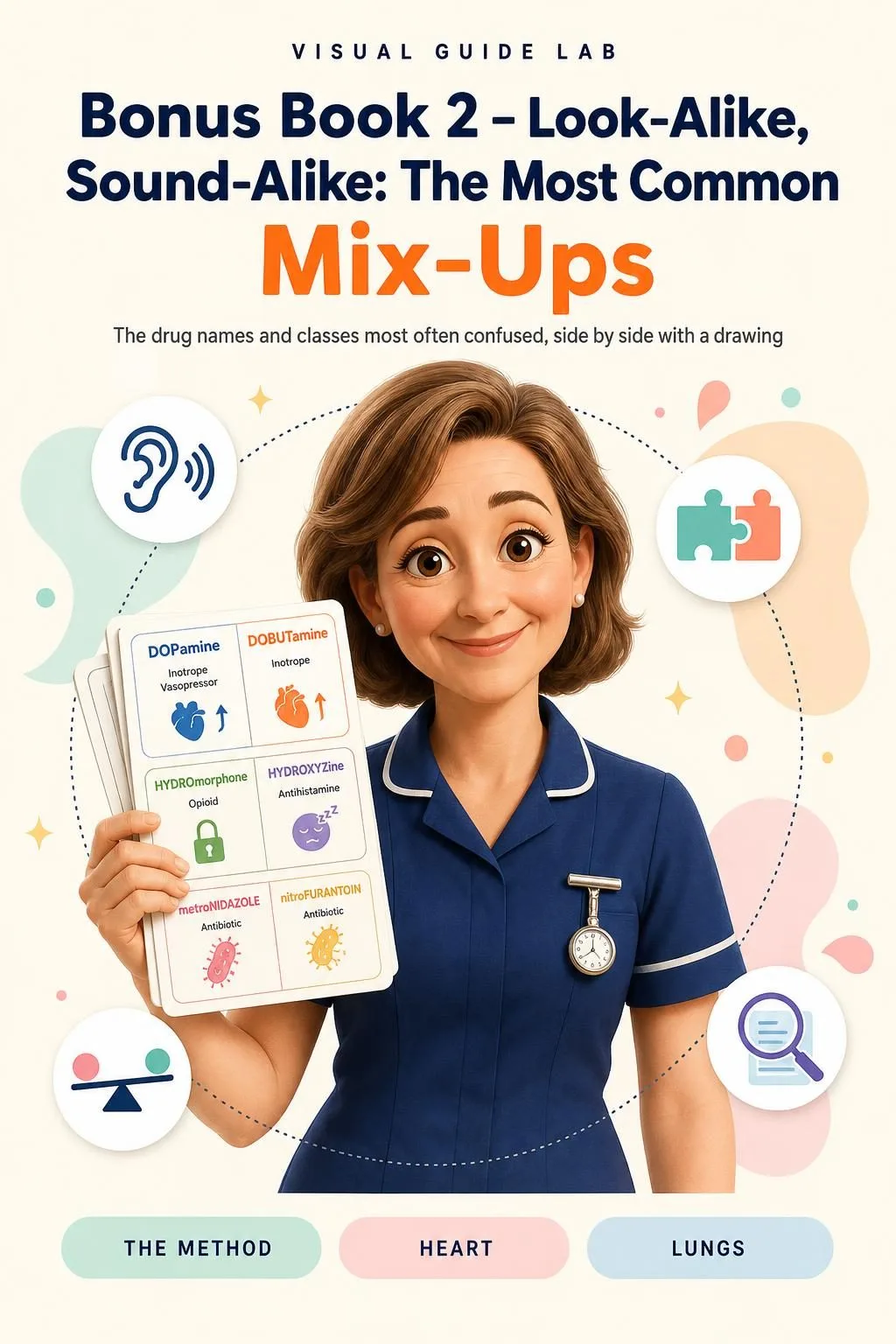
Bonus Book 2 – Look-Alike, Sound-Alike: The Most Common Mix-Ups

BONUS 2: «Bonus Book 2 – Look-Alike, Sound-Alike: The Most Common Mix-Ups»

Value on its own: US$ 14.90

The drug names and classes most often confused, side by side with a drawing that tells them apart, for a quick revision the night before.

Pharmacology Illustrated for Nursing + 2 Free Books

  • Pharmacology Illustrated for Nursing: 65 illustrated pagesUS$ 63
  • BONUS 1: Bonus Book 1 – Pharmacology Practice Questions with Answers ExplainedUS$ 17.90
  • BONUS 2: Bonus Book 2 – Look-Alike, Sound-Alike: The Most Common Mix-UpsUS$ 14.90
  • High-resolution PDF to printIncluded
Total value US$ 95.80
YOUR PRICE:
US$ 27
You save US$ 68.80
YES, I WANT PHARMACOLOGY ILLUSTRATED FOR NURSING FOR US$ 27

📄 This is a digital PDF book sent to your email: nothing is printed or shipped.

Secure purchaseEncrypted payment30-day guarantee

PDF by email: Pharmacology Illustrated for Nursing reaches your inbox as a PDF, and the two free books come by email too. One-time payment, no installments or hidden costs.

Is This Book for You?

You're studying nursing or training as a Nursing Associate

You're studying nursing or training as a Nursing Associate

Every drug class on one page, always in the same 5 steps, to revise between lectures and placement shifts.

Your pharmacology exam is coming up

Your pharmacology exam is coming up

A full revision of every drug class, and at the end all the endings on one page and the most common mix-ups, plus the practice questions in Bonus Book 1.

You already work as an HCA, carer or returning nurse

You already work as an HCA, carer or returning nurse

A quick visual refresher of the medicines you see every day: what each one does, what to watch and when to ask.

To Sum Up: Here Is What You Get

US$ 95.80US$ 27
YES, I WANT PHARMACOLOGY ILLUSTRATED FOR NURSING FOR US$ 27

📄 This is a digital PDF book sent to your email: nothing is printed or shipped.

30DAYS
GUARANTEE

30-Day Guarantee

30-day guarantee: tell us what didn't work and we'll refund 100%.

You have 30 days to try Pharmacology Illustrated for Nursing and the two bonus books. If it doesn't help you, email us, tell us what didn't work and we'll refund 100% of what you paid. One-off payment, no subscription.

Frequently Asked Questions

How do I receive it?

You'll receive Pharmacology Illustrated for Nursing as a high-resolution PDF by email, at the address you enter at checkout, to read on your phone or print. The two bonus books, Pharmacology Practice Questions with Answers Explained and Look-Alike, Sound-Alike: The Most Common Mix-Ups, also come as PDFs by email.

Is it a monthly payment or a one-off?

A one-off payment of £19.99. No instalments and no subscription.

Who is it for?

For adult nursing students, Nursing Associate and Pharmacy Technician apprentices, healthcare assistants and carers trained to give medicines, and nurses on a Return to Practice course. It starts from the basics (generic names, how drugs work) and goes up to high-risk medicines, interactions and the most common mix-ups, so it works as a first study guide or as a quick refresher if you already work on the ward. Have a look at the contents above to see every topic.

What sources is it based on?

The British National Formulary (BNF), NICE guidance and Clinical Knowledge Summaries, MHRA Drug Safety Updates, the NMC Future nurse proficiencies and UKHSA antimicrobial stewardship guidance (Start Smart then Focus). It uses UK generic names throughout, such as paracetamol and adrenaline, and no brand names.

Is it official material?

No. It's an independent illustrated study guide. It isn't published or endorsed by the NHS, NICE, the BNF, the MHRA, the NMC or any university, and it doesn't come with a certificate, CPD hours or a qualification.

Does it replace my course or the BNF?

No. It's study material to help you understand and revise. It doesn't give doses or tell you what to give a patient: the drug calculations page is a study exercise. It doesn't replace your course, your placement supervision, your employer's medicines policies, the BNF, the prescriber or the pharmacist, and it contains no treatment plans for individual patients.

Are the practice questions the ones in my exam?

No. The questions in Bonus Book 1 are written for this book and aren't official questions from any exam or university. They're there to help you practise.

Can I print it?

Yes. It's a high-resolution PDF: you can print the whole book or just the pages you want to keep in your placement folder.

What if I don't like it?

You have a 30-day guarantee: tell us what didn't work and we'll refund 100%.

One Last Thing Before You Decide...

You don't have to reread the same page hoping it sticks this time.

You don't have to memorise drug names you can't picture.

And you certainly don't have to walk into your exam not knowing where to start.

There's a simpler way. And it's one click away. Now it's over to you.

One-time payment: US$ 27 · Guarantee: 30 days · PDF by email

YES, I WANT PHARMACOLOGY ILLUSTRATED FOR NURSING FOR US$ 27

📄 This is a digital PDF book sent to your email: nothing is printed or shipped.